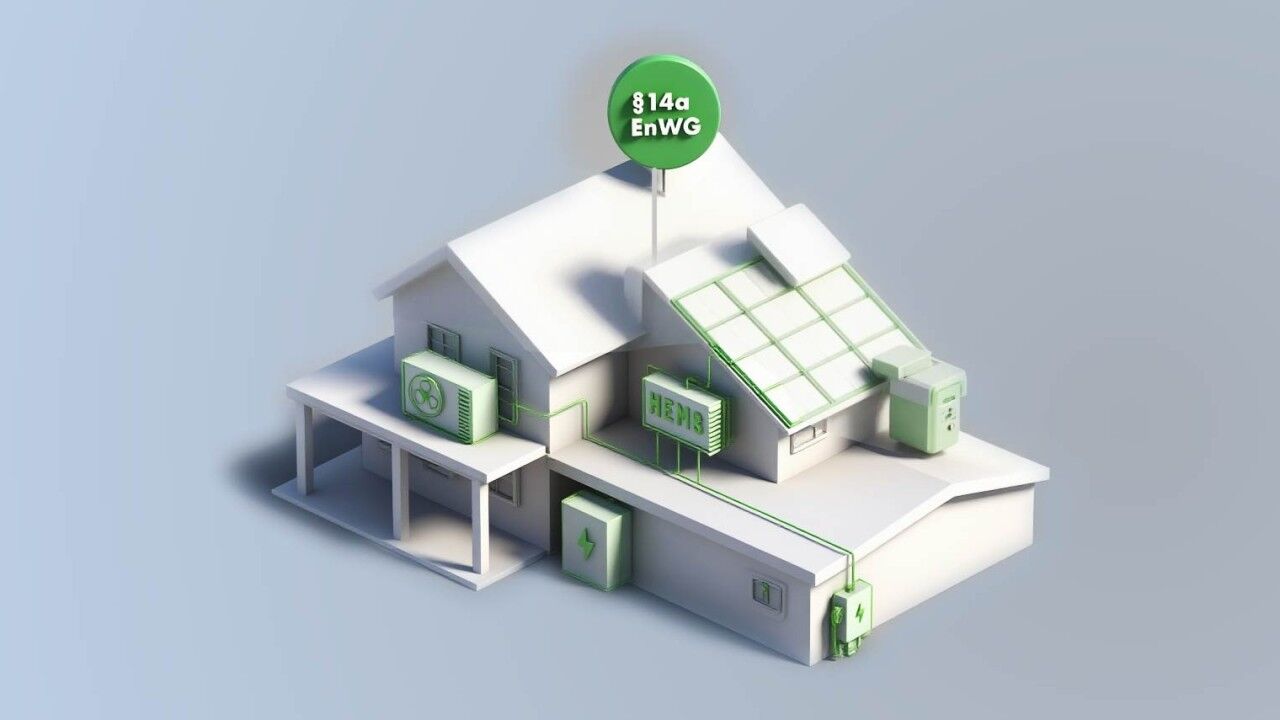
Unlocking the New Energy Rules: Germany’s §14a Reform Marks a Turning Point for Home Energy Management
As electricity demand continues to rise, the energy transition is accelerating at an unprecedented pace. At the beginning of 2024, a seemingly low-profile energy regulation officially came into force in Germany — §14a of the Energy Industry Act (EnWG). It quickly drew broad attention across the power sector, as it signals a fundamental redefinition of how the German grid interacts with residential energy devices.
As electricity demand continues to rise, the energy transition is accelerating at an unprecedented pace. At the beginning of 2024, a seemingly low-profile energy regulation officially came into force in Germany — §14a of the Energy Industry Act (EnWG). It quickly drew broad attention across the power sector, as it signals a fundamental redefinition of how the German grid interacts with residential energy devices.
I. What Does §14a EnWG Require?
§14a is a key provision of Germany’s Energy Industry Act (EnWG), designed to enable smarter load management for high-power residential energy devices.
The provision allows grid operators to temporarily reduce the power consumption of certain controllable devices during periods of high grid load, helping relieve pressure on the distribution network and reduce the risk of overloads or outages. In return, end users can benefit from lower network charges, turning participation in grid-oriented load management into tangible savings on electricity costs.
The Three Core Objectives of §14a
• Safeguard grid stability: With electrification accelerating, the priority is to maintain the safe and reliable operation of the low-voltage distribution network.
• Enable flexible load management: During peak periods, the power consumption of controllable devices can be temporarily reduced — rather than forcing them to shut down completely.
• Create incentives for smarter electricity use: By offering network charge reductions, the policy encourages consumers to actively participate in load shifting and grid-friendly energy management.
Policy Highlights
Since January 2024, all newly grid-connected residential devices with a rated power above 4.2 kW — such as heat pumps and EV chargers — must be equipped with controllability.
In other words, these devices must be able to understand grid operator control signals and respond in an intelligent, coordinated way.
II. Why This Regulation Matters
§14a is a strategic measure designed to address the challenges of Germany’s energy transition while safeguarding the stable operation of the distribution grid. Faced with accelerating electrification and grid expansion that cannot keep pace, Germany has chosen a dual-track approach:
1. Empower grid operators through regulation to enhance dispatch flexibility;
2. Use consumer incentive mechanisms to encourage more devices to become controllable, helping ease peak demand.
This marks a fundamental shift: residential energy devices are no longer standalone assets, but coordinated nodes within the power system. Devices without response capabilities risk being restricted in grid access or pushed to the margins of the market.
For businesses, §14a is not just a technical requirement — it is increasingly becoming a market-entry benchmark. Those who move faster to achieve system-level compliance will be better positioned to capture early opportunities in Germany and across the broader European market.
III. How §14a EnWG Is Reshaping Home Energy Management
With the rollout of §14a EnWG, expectations for residential energy devices in Europe are moving beyond hardware compliance alone. The market is entering a new phase defined by integrated hardware-software capabilities and intelligent coordination. In this transition, platform-based products with strong HEMS (Home Energy Management System) integration capabilities are becoming a key differentiator for device manufacturers.
Solutions such as UltimateBox HEMS illustrate this shift well. By leveraging standardized interfaces and enabling deeper coordination with grid operators, they can prioritize on-site generation, such as PV, or battery storage when grid power is constrained — helping maintain continuity of energy use and household comfort while minimizing the user impact of grid-imposed power limitations.
IV. The New §14a EnWG Framework: Challenges and Opportunities for Businesses
1. Compliance with Grid Requirements: The Entry Ticket — and the Differentiator
With §14a of Germany’s Energy Industry Act now in force, products that fail to meet communication and dispatch requirements will increasingly lose competitiveness in the German market.
Compliance is only the starting point. The real competitive edge lies in intelligence — in the ability to translate compliance into flexible control, optimized dispatch, and data-driven value creation. Those who can do this first will be the ones to seize the high ground in the market.
2. The Compliance Path for Businesses: From Passive Adaptation to Proactive Value Creation
These systems create value in several key ways:
Flexible power control: Enables real-time response to grid dispatch signals, with intelligent power adjustment coordinated through EEBus.
Dynamic tariff recognition: Uses AI-driven optimization to interpret real-time electricity price signals and adjust energy strategies accordingly, helping reduce operating costs.
Unified cross-brand device management: A single system can centrally coordinate multi-brand assets — including heat pumps, battery storage, and EV chargers — while supporting remote O&M and compliant data reporting.
Compliance is the baseline, but intelligence is the real competitive advantage.
The companies that move fastest from compliance to intelligence will be best positioned to seize the early opportunities of this energy transition.
V. Industry Trend: Controllability Is Becoming Europe’s New Standard
In the era of smart energy, compliance is only the starting point. The signal sent by §14a EnWG is already prompting policy follow-up across multiple EU markets, with similar regulatory frameworks gaining momentum at an accelerating pace.
For device manufacturers, moving early on intelligent adaptation is not only a way to meet regulatory requirements, but also a strategic step toward capturing the opportunities of the energy transition and building long-term competitive advantage.
If you would like to learn more about device adaptation strategies under §14a, feel free to leave a comment or send us a direct message.