Decoding EEBus: The Common Language for Interconnected Energy Devices
In smart energy management, device interoperability is essential to unlocking greater energy efficiency. Yet in practice, the diversity of communication protocols used by different manufacturers often creates compatibility barriers, leading to fragmented ecosystems and persistent data silos. This is precisely why EEBus (Energy Efficiency Bus) has gained increasing attention. But what exactly is EEBus, and how does it enable seamless communication between devices? Let’s take a closer look at its core concepts, technical foundations, and real-world applications.
I. What Is EEBus?
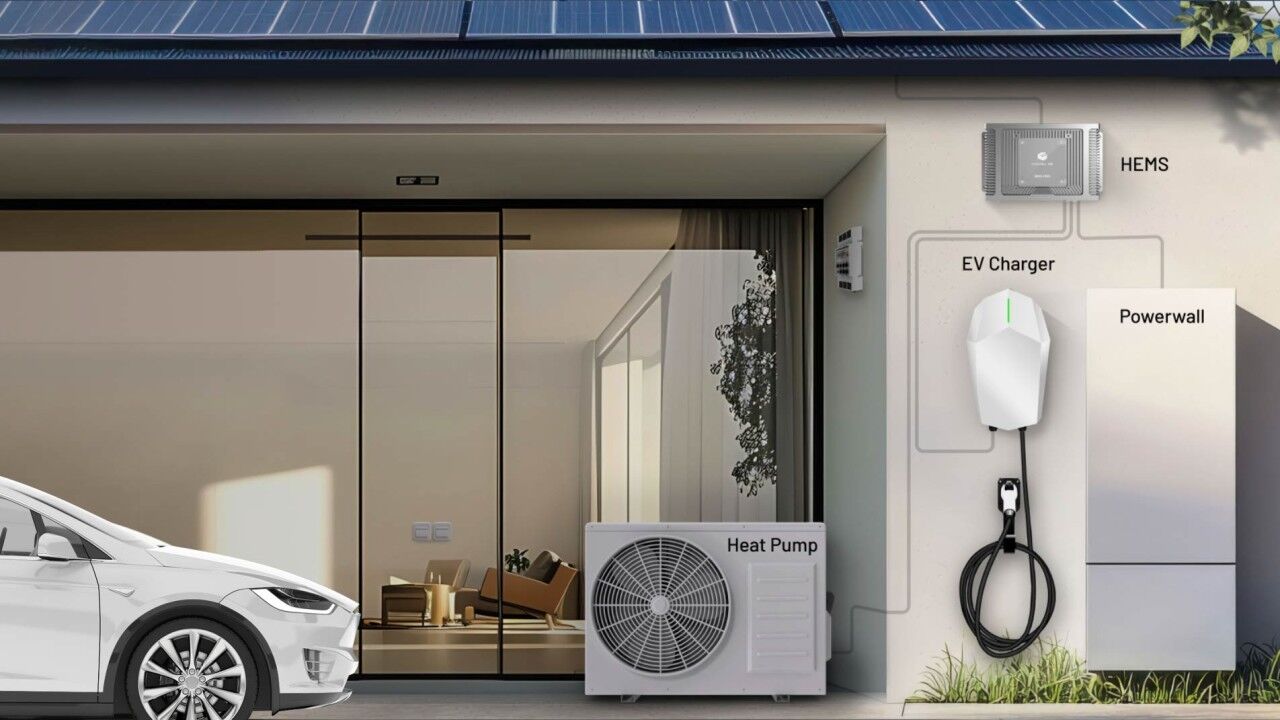
EEBus is an open and standardized communication protocol that functions as a common language for energy devices. It enables seamless interaction among PV systems, battery storage, EV chargers, smart meters, heat pumps, and the grid, supporting coordinated actions such as energy optimization and load balancing. By delivering cross-brand and cross-technology interoperability, EEBus helps eliminate data silos and makes energy management more streamlined, intelligent, and user-friendly.
II. The Technical Core of EEBus
The technical architecture of EEBus closely aligns with the five layers of the Smart Grid Architecture Model (SGAM)—the component layer, communication layer, information layer, function layer, and business layer—forming a comprehensive technology stack that spans from physical devices and underlying communication protocols to application logic and business processes.
Its core technical architecture consists of the following components:
Communication Layer: SHIP (Smart Home IP) Protocol
Designed to support plug-and-play interoperability and secure device networking.
Information Layer: Built on SPINE (Service Protocol for Intelligent Network Extension)
Provides a common semantic framework for device communication, allowing data to be exchanged in a standardized manner and ensuring that devices from different manufacturers can understand one another.
Functional Layer: Modular Use Case Specifications
Builds on the standardized data provided by the information layer (via the SPINE protocol), applies application-level logic, and translates it into executable control strategies or service commands.
III. How Does EEBus Work?
As a common language for the energy ecosystem, EEBus enables energy management systems to seamlessly connect and orchestrate a broad range of energy assets, including PV, battery storage, EV chargers, smart meters, heat pumps, and other controllable loads. At the same time, it facilitates bidirectional communication between household energy assets and the grid. This standardized communication architecture supports not only direct interaction among local devices, but also data exchange between EMS cloud platforms and end devices—laying the foundation for an end-to-end intelligent energy network.
IV. Why EEBus Matters?
1. Policy-Driven: Regulations Are Accelerating Communication Protocol Standardization
In 2023, Germany introduced new rules under §14a of the Energy Industry Act (EnWG), requiring that, from January 1, 2024 onward, all newly installed devices above 4.2 kW — including heat pumps, EV chargers, battery storage systems, and air-conditioning units — must be equipped with remote controllability.
To address today’s fragmented landscape — where device manufacturers use different protocols and standards remain highly inconsistent — §14a points to two practical pathways forward:
• Developing a unified communication standard (currently underway).
• Leveraging smart energy management systems such as UltimateBox HEMS to bridge protocol differences and enable unified interoperability.
At present, EEBus is the only standard protocol that has been broadly validated and adopted across key devices such as heat pumps, battery storage, PV systems, and EV chargers, making it one of the most practical technical enablers for the effective rollout of §14a.
2. Industry Value: Bridging Devices, End Users, and the Grid
For end users: It delivers a plug-and-play smart energy experience, eliminating concerns over compatibility across different brands and devices.
For grid operators: It enables intelligent load flexibility and demand-side control during peak periods, helping enhance overall grid stability.
For device manufacturers: It reduces the need for repetitive integration work and lowers the cost of protocol customization, allowing them to focus more on core product differentiation and innovation.
V. Real-World Applications of EEBus
Smart Electricity Price Response
By receiving time-of-use tariff signals via EEBus, residential EV chargers can intelligently schedule charging during off-peak periods, helping lower electricity costs while reducing peak-demand pressure on the grid.
PV and Storage Optimization
Surplus solar generation produced during the day can be stored in the battery system and used later at night, increasing household energy self-consumption by up to 30%.
Grid Emergency Demand Response
In the event of excessive local grid load, EEBus enables remote power regulation of connected devices to mitigate overload risks and help prevent widespread power outages.
Smart Home Energy Coordination
Air conditioning, ventilation, and underfloor heating systems can work in coordination through EEBus, automatically adjusting to achieve the optimal balance between comfort and energy efficiency.
Use Case: UltimateBox HEMS
As a smart home energy management platform with EEBus integration, UltimateBox HEMS intelligently orchestrates PV, battery storage, home appliances, and EV charging devices based on real-time electricity prices, grid signals, and household load conditions. This enables households to reduce energy costs while maintaining safe, reliable, and efficient energy use.
VI. Challenges and Future Outlook
While EEBus has shown strong value as an interoperability framework for energy devices, especially in enabling efficient coordination across multi-brand ecosystems, its standardization journey still faces a number of real-world challenges.
As the protocol evolves, backward-compatibility challenges may arise, and any update to use cases typically requires thorough validation by integration teams. Meanwhile, although many mainstream device manufacturers in Germany and neighboring countries already support the standard, the number of real-world commercial deployments still falls short of industry expectations.
Worth noting is that, with the rollout of the EU’s latest energy efficiency regulations and the market’s growing focus on open protocols, EEBus is gradually emerging as a core communication protocol for next-generation smart home energy management systems—thanks to its forward-looking system architecture.
What’s your take on EEBus? Feel free to share your thoughts in the comments.