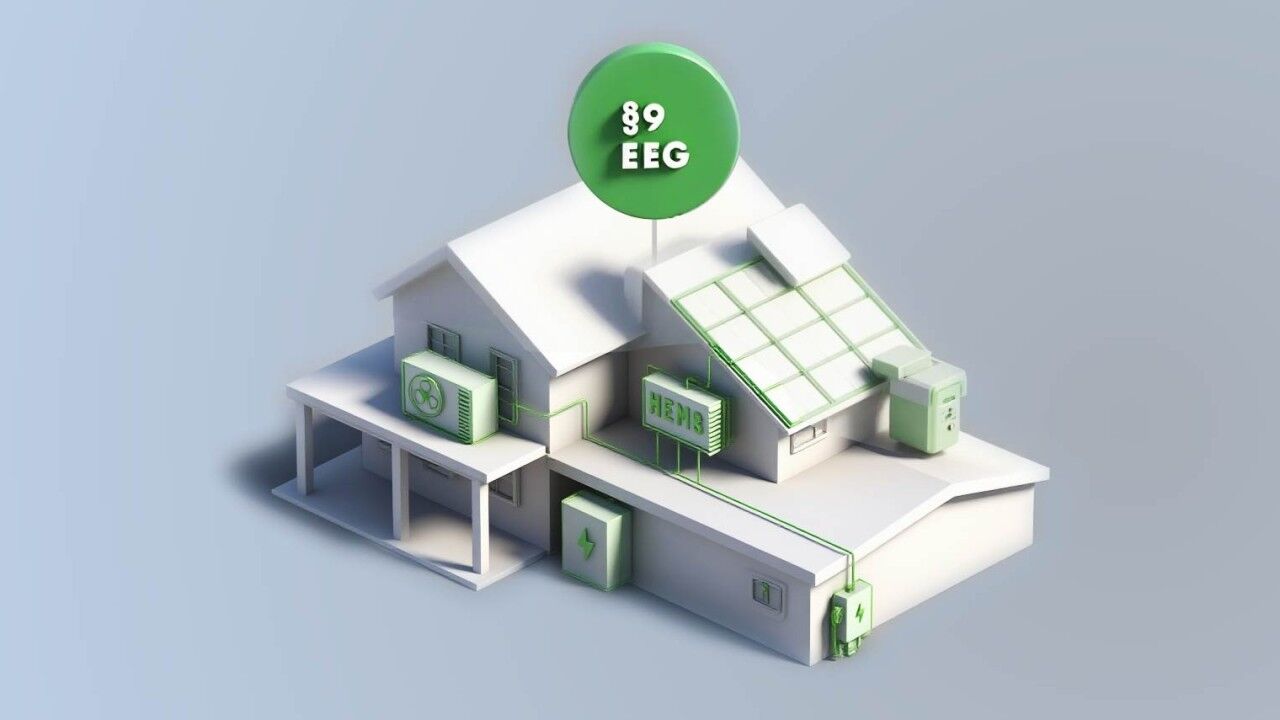
Germany’s Renewable Energy Act §9 (EEG) Gets a Major Upgrade: A New Smart Compliance Threshold for Manufacturers Expanding Overseas
Starting in 2025, §9 of Germany’s Renewable Energy Sources Act (EEG) is undergoing a major upgrade. This means that new generation assets — especially PV and CHP systems — are entering a new era of remote controllability, smart metering, and real-time communication. In practical terms, the rules for renewable grid integration are being fundamentally reshaped: the old model of simply connecting to the grid and selling electricity is giving way to a smarter standard built around visibility, controllability, and dispatchability.
This is not just a technical upgrade — it represents a fundamental transformation in the energy management paradigm.
I. What Key Changes Does §9 EEG Introduce?
§9 EEG is one of the key provisions of Germany’s Renewable Energy Sources Act, defining the technical requirements for renewable energy systems to connect to the grid. With the 2025 revision, the new compliance thresholds are set to systematically reshape the requirements for all new renewable generation assets above 2 kW.
1. Remote controllability becomes mandatory for systems above 2 kW
For newly installed PV and CHP systems above 2 kW, remote controllability is becoming a core requirement, with integration into a smart metering system (iMSys) and a remote control unit forming a key part of the new compliance framework.
2. Small-scale systems are no longer exempt
Only plug-in PV systems with an output below 2 kW or an inverter capacity of less than 800 VA remain exempt. All other systems are expected to fall within the scope of controllability requirements.
3.Transitional restriction rules are introduced
• 2–25 kW: Until the smart metering system is fully installed, feed-in power is limited to 60%.
• 25–100 kW: Systems must be equipped with basic control technology and remain subject to the 60% feed-in limit.
• Above 100 kW: These systems must already be equipped with full remote control capability.
• Existing systems: Legacy systems installed before February 25, 2025 are exempt from the new requirements and can continue feeding into the grid at full capacity.
This shift is more than just another regulatory update. It marks a key step in Germany’s broader energy digitalization agenda — and signals a new round of compliance challenges and technology upgrade demands for equipment manufacturers, system integrators, and end users alike.
II. Why This Regulation Matters
With the rapid growth of intermittent renewable energy sources such as solar and wind, Germany’s power grid is facing unprecedented stability challenges.
Grid congestion is occurring more frequently: When renewable generation peaks, the grid cannot always absorb the excess electricity, making curtailment or temporary disconnection increasingly necessary.
Negative price risk is rising: In some periods, higher generation no longer means higher revenue — it can even result in negative returns, undermining overall project economics.
Power system decentralization is accelerating: With the rapid rise of distributed generation assets, a more unified mechanism for coordination and dispatch is becoming essential.
Against this backdrop, §9 EEG represents a strategic response. It gives grid operators the ability to monitor and dynamically manage renewable generation in real time, helping reduce the systemic risks associated with grid overloads and reverse power flows.
The implementation of §9 EEG is a core instrument in Germany’s effort to safeguard grid stability and advance the energy transition. Its key technical enablers include:
Smart Meter Gateway (SMGW): Enables secure communication and real-time data exchange.
Intelligent metering system (iMSys): Supports the transmission of curtailment signals and the execution of dispatch instructions.
Together, these technologies enable grid operators to monitor and dynamically regulate renewable generation in real time, helping prevent systemic risks caused by grid overloads.
III. The Connection Between §9 EEG and §14a EnWG
§9 EEG should not be viewed in isolation. It is closely connected to another important German regulation, §14a EnWG. While §14a EnWG governs the remote control of flexible loads — including heat pumps, EV chargers, and battery storage systems — and emphasizes that electricity consumption must be grid-responsive, §9 EEG addresses the generation side. It applies to distributed energy assets such as PV, CHP, and wind systems, and is designed to ensure that grid operators can limit feed-in whenever necessary to reduce the risks of grid congestion and uncontrolled renewable generation.
While the two regulations apply to different types of devices, their underlying technical architecture is highly aligned, with the Smart Meter Gateway (SMGW) and intelligent metering system (iMSys) serving as the common foundation. By acting on both the supply side and the demand side, they are together pushing distributed energy systems into a new stage of intelligent, visible, and controllable operation.
IV. New Challenges in the Era of System Integration
With both §9 EEG and §14a EnWG taking effect, compliance is no longer just a matter of upgrading individual devices. It has become a system-level challenge of coordination and interoperability. Every stakeholder — from asset owners and equipment manufacturers to installers, platform providers, and grid operators — is now facing the same reality: devices must support remote controllability, protocol compatibility, and system-wide coordination, or risk losing relevance in the market.
For device manufacturers targeting overseas markets, this new landscape brings three hard transformation thresholds — each of which is becoming critical to future competitiveness.
Interface capability: Devices must be able to support remote control and respond reliably to grid signals.
Communication protocols: Protocols such as EEBus enable cross-brand interoperability and coordinated operation across devices.
Hardware-software coordination: It is no longer enough to achieve electrical compliance alone — devices must also be integrated and adapted at the software and communication layer.
These requirements can no longer be met by the device alone.
The real issue is no longer whether devices need to become smarter. It is whether they can be integrated into system-level management — and whether they are able to understand and respond to dispatch signals in a smart grid environment.
At this critical point of transition, HEMS (Home Energy Management System) is becoming a key enabler for manufacturers navigating these new challenges.
With HEMS integration, manufacturers can accelerate compliance with both §9 EEG and §14a EnWG, while positioning themselves for participation in a more integrated and system-driven energy market.
V. HEMS Will Become the “Energy Control Hub”
As the energy system becomes smarter, HEMS (Home Energy Management System) is emerging as a foundational platform for coordination across the ecosystem. Deployed locally, it bridges the generation side — such as PV — with flexible loads like heat pumps, EVs, and battery storage, enabling more integrated and intelligent control.
UltimateBox HEMS is a good example of how manufacturers can address these challenges in practice:
The technical foundation needed to connect with grid control signals under both §9 EEG and §14a EnWG
Cross-brand device interoperability: Helps connect residential assets — including PV, battery storage, EV chargers, smart meters, and heat pumps — to enable coordinated response to grid dispatch.
Dynamic monitoring of generation and load status: Tracks PV output, battery state of charge, and load operation in real time, helping minimize curtailment and improve local self-consumption.
Intelligent load dispatch: Prioritizes when connected devices should operate and automatically executes charging schedules, improving equipment efficiency and supporting off-peak energy use.
Remote response to grid dispatch: Responds to grid operator signals and adjusts power as needed, helping avoid unnecessary curtailment and ensuring regulatory compliance.
Optimized self-consumption: Uses generation and load data to automatically generate dispatch recommendations, improving returns and reducing dependence on the grid.
VI. Challenges and Future Outlook
The revision of §9 EEG is not just about raising the compliance bar. It is also a key catalyst for the industry’s transition toward smarter energy systems. By pushing renewable assets beyond simple power generation and toward dispatchability, connectivity, and system integration, it is laying the groundwork for more advanced energy optimization and flexibility in the future.
For manufacturers, this is a valuable window for transformation. To earn a lasting place in the era of smart energy, they will need to move beyond standalone devices and build an integrated “device + platform + data” architecture — one designed for open communication, remote controllability, and system-wide coordination.
If you would like to learn more about the policy trends, technical requirements, and solution pathways under Germany’s Renewable Energy Sources Act §9 (EEG), feel free to leave a comment or send us a direct message.